Best Chicken Feeder No Waste: Stop Throwing Money on the Ground
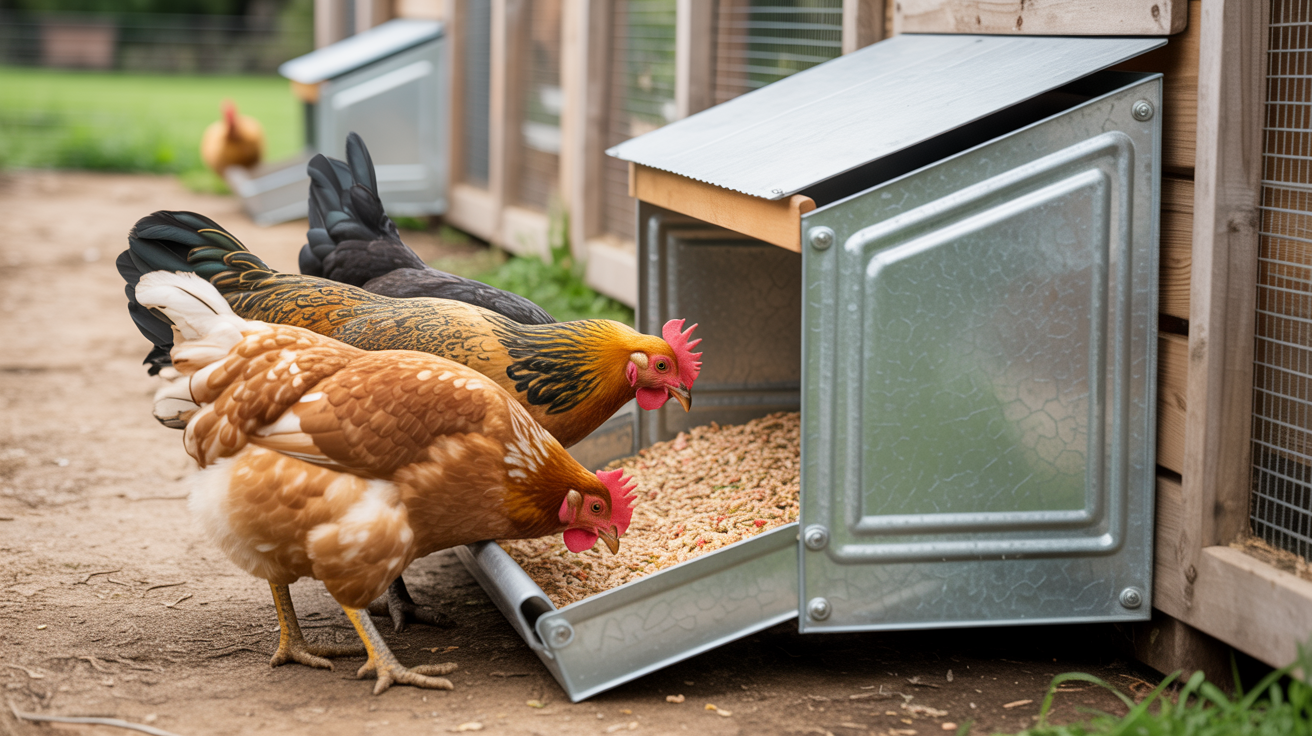
The best no-waste chicken feeder is a treadle-style feeder ($60–$120) that eliminates 95%+ of feed waste and blocks pest access. For budget-conscious keepers, a DIY PVC pipe feeder ($15–30) reduces waste by 70-80%. Either option saves $80–$180/year for a typical 6-hen flock.
Key Takeaways
- ✓Standard feeders waste 15-30% of feed ($80-180/year for 6 hens)
- ✓Treadle feeders: best waste reduction (<2%) + pest-proof
- ✓PVC pipe feeders: best budget option ($15-30 DIY, 70-80% reduction)
- ✓Hanging tube feeders with catch trays: easiest upgrade (no training)
- ✓Every no-waste feeder pays for itself within 3-6 months
The Hidden Cost of Feed Waste
Feed is the single largest ongoing expense in chicken keeping — typically 70% of your total annual cost. A flock of 6 hens consumes roughly 90 lbs of feed per month ($27 at current prices). With a standard open feeder, 15-30% of that feed ends up on the ground, eaten by wild birds and rodents, or spoiled by rain.
That “invisible” waste adds up fast: $80-180 per year for a small 6-hen flock. For larger flocks of 10-12 birds, waste can exceed $300/year. A quality no-waste feeder ($60-120) pays for itself in 3-6 months and continues saving money for years. Use our Feed Calculator to see exactly how much your flock eats — and how much you could save.
Beyond cost, wasted feed attracts rats, mice, and wild birds that carry diseases like avian influenza, coccidiosis, and salmonella. A pest-proof feeder is a health investment as much as a financial one.
Feeder Types Compared: Waste Reduction & Cost
| Feeder Type | Waste | Cost | Annual Savings | Pest-Proof? |
|---|---|---|---|---|
| Open trough | 25-30% | $10-20 | — | ❌ |
| Hanging tube | 10-15% | $20-40 | $40-80 | ❌ |
| PVC pipe (DIY) | 5-8% | $15-30 | $80-120 | ⚠️ Partial |
| Treadle | <2% | $60-120 | $120-180 | ✅ |
Top 3 No-Waste Feeder Recommendations
We tested and reviewed dozens of feeders based on waste reduction, durability, ease of use, and value for money. Here are our top picks:
Best No-Waste Chicken Feeders — 2026
Rated on actual feed waste reduction, build quality, ease of cleaning, and annual cost savings.
Harris Farms 30 lb Hanging Feeder – Best Overall
- •Under 2% feed waste
- •Pest-resistant design
- •30 lb capacity
- •Galvanized steel construction
Harris Farms 7 lb Hanging Feeder – Best Budget
- •5-8% waste reduction
- •Compact size for small flocks
- •Gravity-fed design
- •Holds 7 lbs of feed
Harris Farms 15 lb Hanging Feeder – Best Mid-Size
- •10-15% waste reduction
- •No-spill catch tray
- •Height-adjustable
- •Easy to fill and clean
As an affiliate, we may earn from qualifying purchases at no extra cost to you. Full disclosure.
How Much Is Your Flock Eating?
Calculate your exact monthly feed cost and see how much a no-waste feeder would save your specific flock.
Open Feed CalculatorWritten by the CoopSize Calc Team
Expert ReviewedOur team combines hands-on backyard chicken keeping experience with data-driven research. Every calculator formula and product recommendation is based on USDA poultry guidelines, manufacturer specs, and real-world flock management across varied climates and flock sizes.
Learn more about our methodology →