Poultry Feed Calculator: Estimate Daily, Monthly, and Annual Feed Needs
Last updated: April 2026
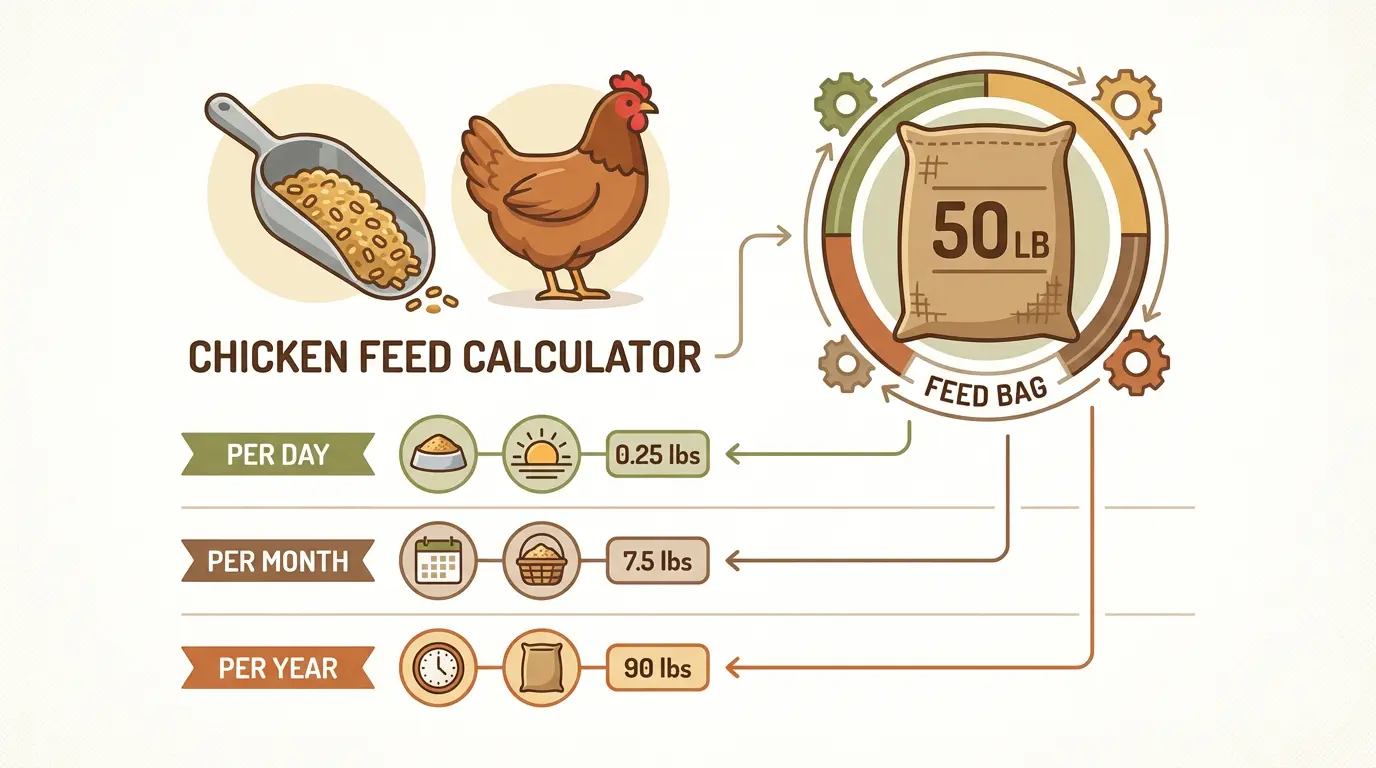
On average, a laying hen eats about 0.25 lb of feed per day. That’s roughly 7.5 lb per month per hen. For a flock of 10 laying hens, plan on about 75 lb per month — roughly 2 bags of 50lb feed depending on waste and free-range access. Use the poultry feed calculator below for exact bag counts and cost.
Key Takeaways
- ✓Layer hen feed consumption averages around 0.25 lb/day per bird.
- ✓Broilers often eat more as they grow; expect higher daily intake.
- ✓Your monthly chicken feed cost depends on bag size, price, and how much gets wasted.
- ✓Buying in bulk can reduce cost per pound, but only if storage stays dry and pest-proof.
- ✓A simple “bags per month” estimate helps you budget and avoid mid-week feed emergencies.
- ✓Space, airflow, and layout directly impact egg production and cleaning workload.
How Much Feed Does a Chicken Eat Per Day?
The most common question behind poultry feed calculator searches is simple: how much feed does a chicken eat per day? For many backyard flocks, daily intake averages about:
- Laying hens: ~0.25 lb (4 oz) per bird per day
- Broilers: often higher, especially in later growth stages
- Chicks: lower, but they need starter feed (and consistent access)
Your real-world number shifts with temperature (birds eat more in cold weather), free-range time (foraging reduces feed demand), and flock dynamics (dominant birds waste less; timid birds may eat less if bullied).
Monthly Chicken Feed Cost: The Simple Budget Formula
To plan monthly chicken feed cost, you only need three pieces of information:
- Daily intake per bird (lb/day)
- Bird count
- Feed price per bag (and bag weight)
Quick formula (layers): Monthly feed (lb) ≈ birds × 0.25 × 30
Then divide by bag weight (often 50 lb) to estimate bags per month. Round up — because running out of feed always happens at the worst time.
How Many Bags of Feed for 10 Chickens?
For 10 laying hens:
- Daily feed ≈ 10 × 0.25 = 2.5 lb/day
- Monthly feed ≈ 2.5 × 30 = 75 lb/month
- 50 lb bags ≈ 75 ÷ 50 = 1.5 bags/month → round up to 2 bags/month
If your flock free-ranges several hours daily, you may use closer to 1–1.5 bags/month. If feed is left open (spillage) or you have rodents, consumption can jump quickly.
Average Chicken Feed Price Per Bag (and What Actually Matters)
Average chicken feed price per bag varies by region, ingredient quality, and whether you buy medicated starter vs. layer feed. The number that matters most for budgeting is cost per pound.
- Cost per pound = bag price ÷ bag weight
- Then: monthly cost = monthly pounds × cost per pound
If you're comparing feeds, compare on cost per pound and protein level. A cheaper bag is not always cheaper if birds waste it or if egg production drops.
Bulk Chicken Feed Savings: When Bulk Buying Helps (and When It Doesn't)
Bulk chicken feed savings can be real, but only if you can store feed safely. Bulk buying makes sense when:
- You use at least 2–3 bags per month (larger flocks).
- You have airtight bins (metal or heavy-duty plastic) to prevent moisture and pests.
- You can keep feed rotated so it stays fresh.
Bulk buying is less helpful for small flocks if the feed sits too long — stale feed can reduce consumption and performance.