Backyard Chicken Profitability: Are Chickens Actually Worth the Investment?
Most backyard flocks break even by year 2 on egg costs alone. The real profit comes from selling surplus eggs at $5-8/dozen and composted manure at $10-15/bag. Use our Egg ROI Calculator for your personalized break-even timeline.
Key Takeaways
- ✓Break-even: 12-24 months for most 6-hen flocks
- ✓Cost per dozen: ~$2.73 backyard vs $4-6 store-bought
- ✓Selling eggs at farmers market prices ($5-8/dozen) speeds ROI dramatically
- ✓Hidden benefits (pest control, compost, food security) add $150-300/year in value
- ✓High-production breeds lay 300+ eggs/year vs 200 for heritage breeds
Is Raising Chickens Worth It? (The Hidden ROI)
Most profitability discussions focus only on eggs — but that ignores half the financial picture. Chickens deliver compounding returns that don't show up on a grocery receipt.
Composted manure is the sleeper asset. Six hens produce roughly 1 cubic foot of droppings per month, which composts into premium garden fertilizer worth $10-15 per bag if you sold it at a farmers market. Over a year, that's $120-180 in fertilizer value — nearly matching your annual feed costs of $360-480.
Pest control is another hidden return. A flock of 6 hens covers a quarter-acre effectively, consuming thousands of ticks, grubs, beetles, and fly larvae per season. Homeowners typically spend $50-100/year on pesticides for the same coverage. Your chickens do it for free while also aerating your soil with their scratching.
Food security rounds out the intangible value. During the 2025-2026 egg price spikes, backyard flock owners were insulated from $6-8/dozen store prices. That peace of mind — a reliable protein source independent of supply chains — has real value that's hard to quantify.
The Real Break-Even Analysis
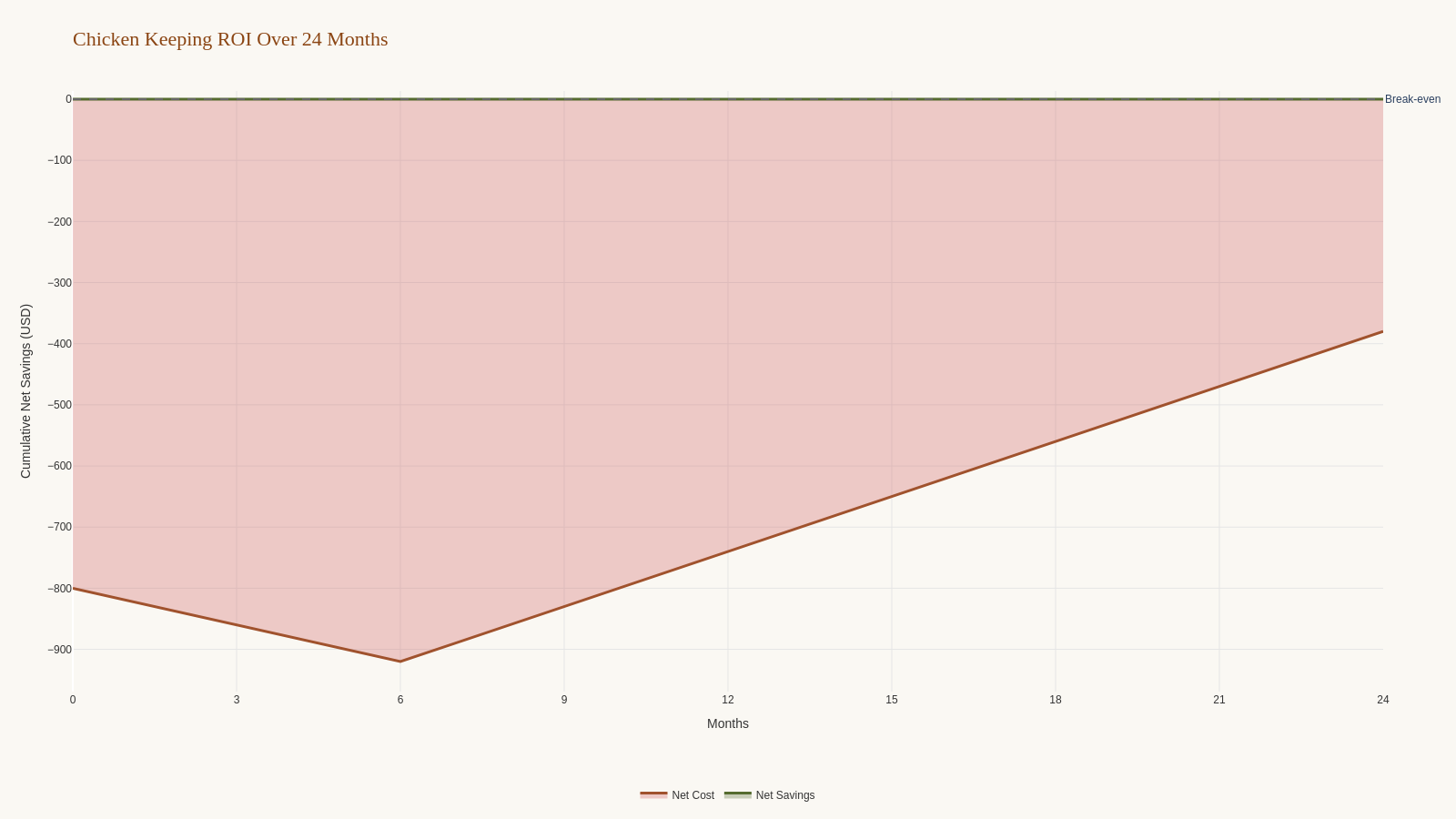
Let's use a common scenario: 6 laying hens, prefab coop, standard equipment. Your initial investment runs approximately $800-1,000. Monthly ongoing costs (primarily feed) run $25-40 for a flock this size.
Six hens produce roughly 130 eggs per month (5 eggs/hen/week). That's nearly 11 dozen eggs monthly. At $4.50/dozen store price, your flock produces about $49 in egg value each month. After subtracting $30 feed cost, you save approximately $19/month — meaning your $900 startup pays for itself in about 47 months (just under 4 years).
But this changes dramatically with egg prices. At $6/dozen (common for organic/free-range), the break-even drops to about 24 months. If you sell surplus eggs at farmers market prices ($7-8/dozen), break-even can happen in under a year.
Selling Chicken Eggs for Profit
To generate meaningful egg income, you need 10-12 hens minimum. This size flock produces 50-60 eggs per week, leaving surplus after your family's needs. Farm-fresh eggs command $5-8/dozen at farmers markets, roadside stands, and through social media groups.
Your cost to produce a dozen eggs is roughly $3-4 (primarily feed). At $6/dozen selling price, that's a $2-3/dozen margin. With 12 hens producing 4-5 dozen surplus per week, you're looking at $8-15/week in net egg profit — enough to cover all feed costs and then some.
Many states allow egg sales under cottage food laws without licensing, though requirements vary. Some states require candling and refrigeration; others only require a label. Check your state agriculture department's website before selling.
Store-Bought vs. Backyard Eggs: True Cost Comparison
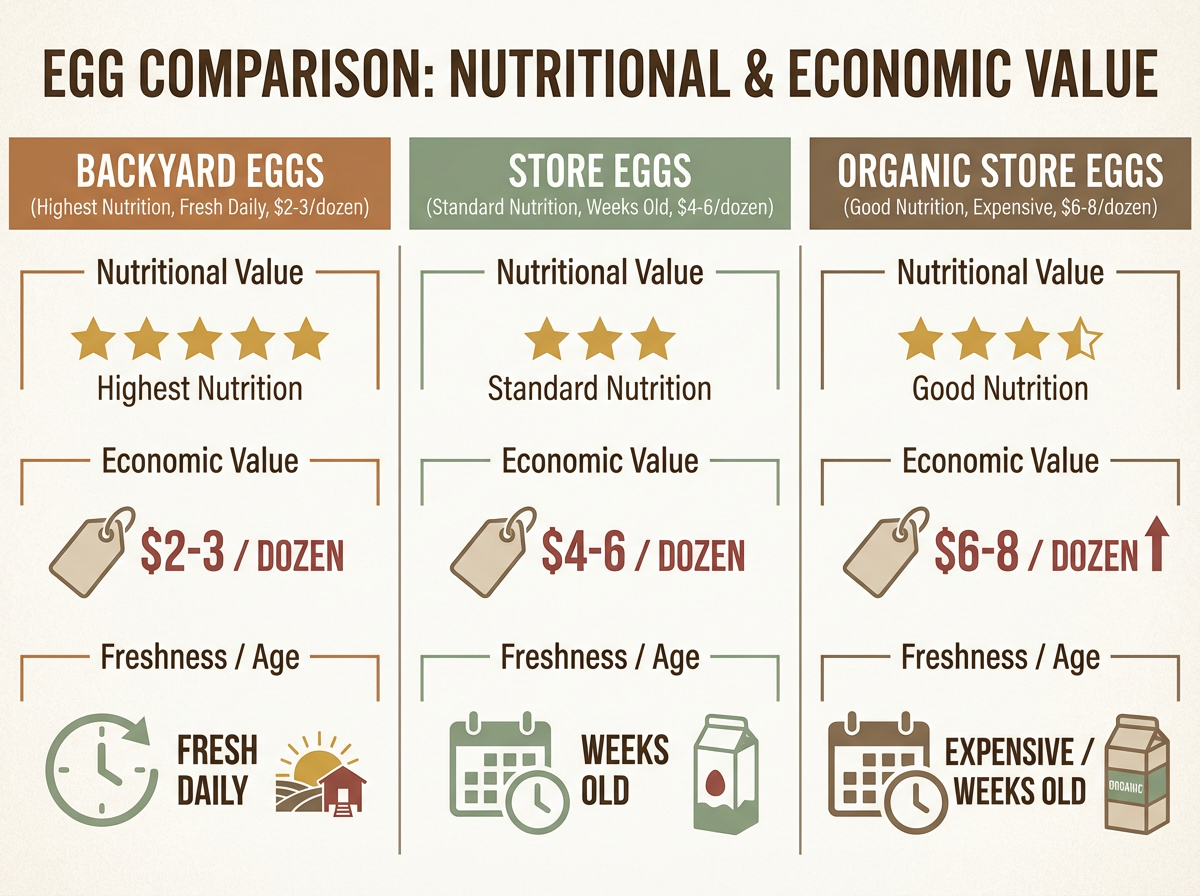
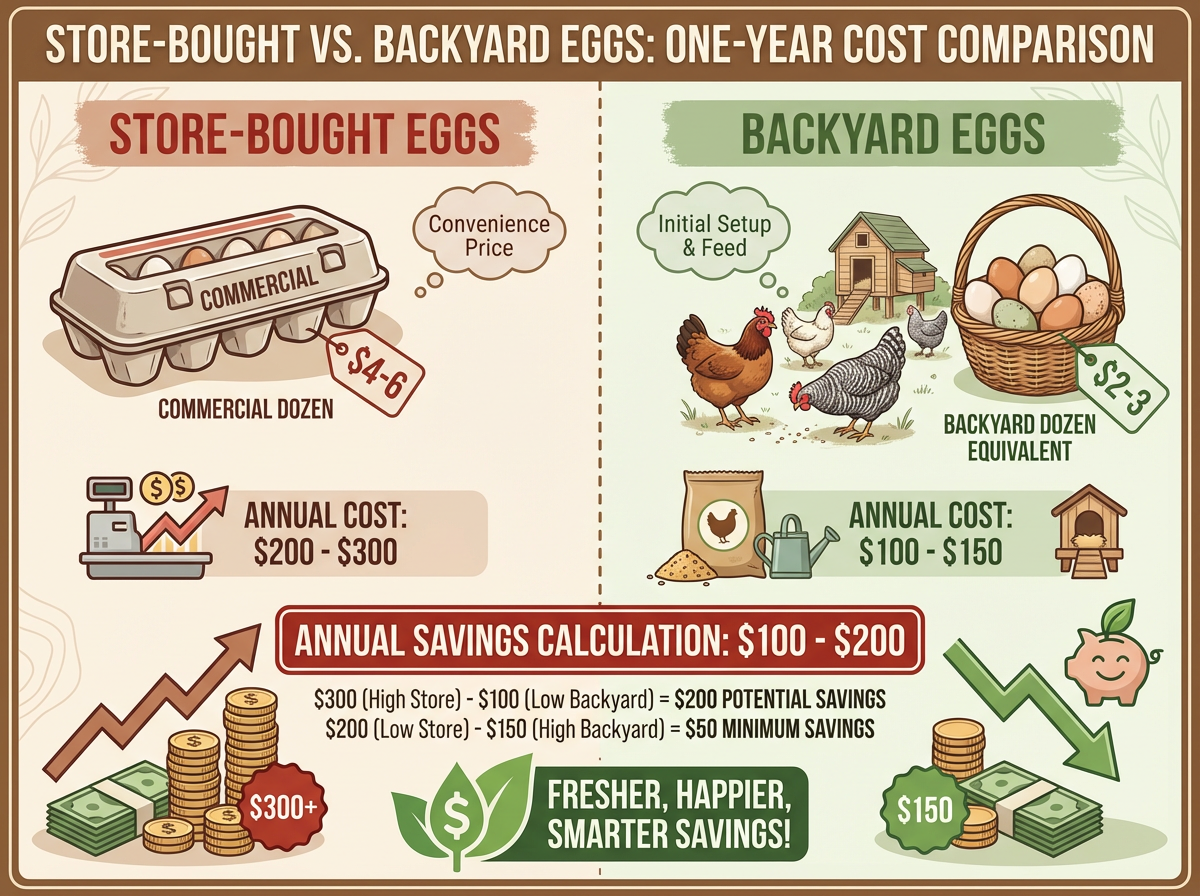
Your actual cost per dozen backyard eggs depends primarily on feed costs and flock size. With 6 hens eating $30/month in feed and producing 11 dozen eggs, your cost per dozen is about $2.73 — significantly cheaper than $4.50 store eggs and a fraction of $6-8 organic store eggs.
The value comparison goes beyond price. Backyard eggs are hours fresh (not weeks old), come from hens eating a varied natural diet, and have been shown to contain more omega-3s, vitamin D, and beta carotene than commercial eggs. You also know exactly what your hens ate — no antibiotics, no questionable feed additives.
Cost-Saving Strategies That Accelerate Your ROI
- Buy feed in bulk: 50lb bags cost 15-25% less per pound than smaller bags.
- Free-range when possible: Reduces feed bills by 10-30% during the growing season as hens forage.
- Ferment feed: Increases digestibility and reduces consumption by 15-20%.
- Grow supplemental crops: Sunflowers, comfrey, and clover provide free nutrition.
- Choose productive breeds: Leghorns and ISA Browns lay 300+ eggs/year vs 200 for heritage breeds.
- Sell composted manure: Premium garden fertilizer at $10-15/bag at farmers markets.
- Hatch and sell chicks: Popular breeds fetch $5-15 per chick in spring.
Calculate Your Exact ROI
Enter your specific flock size, feed costs, and local egg prices to see your personalized break-even timeline.
Written by the CoopSize Calc Team
Expert ReviewedOur team combines hands-on backyard chicken keeping experience with data-driven research. Every calculator formula and product recommendation is based on USDA poultry guidelines, manufacturer specs, and real-world flock management across varied climates and flock sizes.
Learn more about our methodology →