Chicken Coop Size Calculator: Exactly How Much Space Your Flock Needs
Last updated: April 2026
A good rule of thumb is 4 square feet per chicken inside the coop and 10 square feet per chicken in the run for standard breeds. Bantams need about half, while giant breeds like Jersey Giants need significantly more. Use the chicken coop size calculator below to get exact numbers for your flock.
Key Takeaways
- ✓Standard breeds: 4 sq ft indoor + 10 sq ft run per bird (minimum).
- ✓Plan 1 nesting box per 3–4 hens (nesting box ratio matters more than people think).
- ✓Allow 1 linear foot of roosting bar length per hen to reduce fighting.
- ✓Building 25–50% larger than minimum coop size prevents overcrowding when your flock grows.
- ✓Space, airflow, and layout directly impact egg production and cleaning workload.
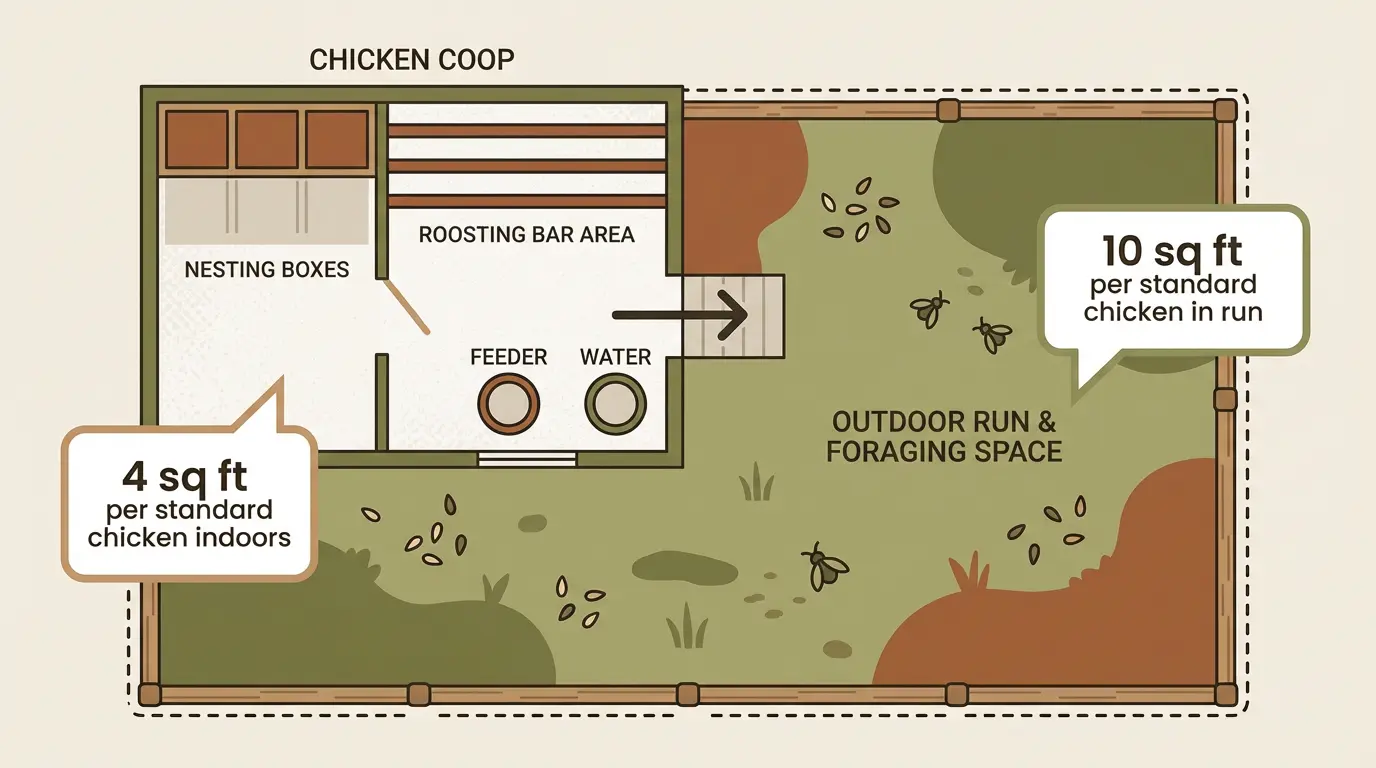
How Many Square Feet Per Chicken? (The Baseline Rules)
If you're searching for backyard chicken space requirements, it helps to separate your build into two zones: (1) indoor coop space and (2) outdoor run space. Most "it depends" answers become simple when you decide your breed size and your management style (confined run vs. free-range).
Standard breeds: 4 sq ft per chicken indoors + 10 sq ft per chicken in the run. This baseline supports normal behaviors (roosting, nesting, eating, moving away from aggressive birds) and keeps ammonia levels lower because litter stays drier.
Breed Size Matters: Bantam vs Standard vs Giant
Not all chickens take up the same space. A bantam flock can thrive in a smaller footprint, while big-bodied birds need more room to avoid bullying and injury. Use this as your starting point, then add buffer space if you live in a cold climate (birds spend more time inside) or if your flock is confined regularly.
| Breed size | Indoor coop space (per bird) | Run space (per bird) | Examples |
|---|---|---|---|
| Bantam | 2 sq ft | 5 sq ft | Silkies, Sebrights |
| Standard | 4 sq ft | 10 sq ft | Rhode Island Red, Leghorn |
| Giant / Large | 8 sq ft | 15 sq ft | Jersey Giant, Brahma |
Chicken Coop Dimensions for 6 Chickens (and Other Common Flock Sizes)
These examples are the most searched because people plan around flock "packages" (starter flocks and coop kit sizes). Below is a simple sizing chart you can use as a baseline. For exact dimensions based on your breed type, run the chicken coop size calculator.
| Flock size (standard) | Minimum indoor coop (sq ft) | Minimum run (sq ft) | Example coop footprint |
|---|---|---|---|
| 4 chickens | 16 | 40 | 4′ × 4′ coop + 4′ × 10′ run |
| 6 chickens | 24 | 60 | 4′ × 6′ coop + 6′ × 10′ run |
| 8 chickens | 32 | 80 | 4′ × 8′ coop + 8′ × 10′ run |
| 10 chickens | 40 | 100 | 5′ × 8′ coop + 10′ × 10′ run |
| 12 chickens | 48 | 120 | 6′ × 8′ coop + 10′ × 12′ run |
Nesting Boxes: How Many Do You Actually Need?
The rule is 1 nesting box per 3–4 hens. Hens prefer to share, so adding too many boxes wastes space and encourages sleeping (and pooping) inside the boxes. Place nesting boxes in a dark, quiet corner of the coop, 18–24 inches off the ground, and lower than the roosting bars so hens roost on bars instead of nesting boxes.
Roosting Bar Length and Placement
Each hen needs about 1 linear foot of roosting bar. Too little bar space leads to pecking-order fights at night, especially in cold weather when birds crowd together. Use 2-inch-wide flat-top bars (not round dowels) and space rows 12–18 inches apart horizontally. Stagger bars at slightly different heights — chickens will sort themselves by rank.
Ventilation: The Most Overlooked Sizing Factor
Plan for at least 1 sq ft of ventilation opening per 10 sq ft of floor space. Place vents high on the walls so hot, moist air exits without creating drafts at roost level. Good airflow keeps ammonia down, prevents frostbite in winter (moisture, not cold, causes frostbite), and reduces respiratory illness.
Run Sizing: How Much Outdoor Space Per Chicken?
The minimum is 10 sq ft of run per standard chicken, but more is always better. If your flock free-ranges part of the day, the run serves as a safe holding area — so you can lean toward the minimum. If the run is their only outdoor space, aim for 15+ sq ft to prevent bare-dirt patches, boredom, and pecking problems.
What Happens When a Coop Is Too Small?
Overcrowding is the single most common mistake new chicken keepers make. The consequences include:
- Feather pecking and cannibalism — stressed birds take it out on each other.
- Up to 30% drop in egg production — hens lay fewer eggs under stress.
- Faster disease spread — respiratory infections and parasites thrive in tight quarters.
- Higher ammonia levels — more droppings per square foot means toxic fumes build faster.
- Dirty eggs and damaged nests — birds soil nesting boxes when there's nowhere else to go.
Building 25–50% larger than the minimum is cheap insurance against all of these problems — and it means you have room when "chicken math" inevitably kicks in.