How Many Chickens Should You Start With? A Complete Beginner's Guide
Start with 3-5 chickens. Most cities allow up to 6, they're social animals (minimum 3), and 4 hens will give you about 20 eggs per week. That's enough for a family of 4 with some left over to share.
Key Takeaways
- ✓Beginners: 3-5 hens ($400-600 startup, 15-25 eggs/week)
- ✓Families of 4: 6 hens for 36-40 eggs/week at peak
- ✓Egg selling: 10-20+ hens for consistent market supply
- ✓Always check local regulations before buying — most cities cap flocks at 4-8 hens
- ✓Buy 1-2 extra chicks to account for mortality and accidental roosters
The Beginner Chicken Keeping Checklist
Before you bring chicks or pullets home, make sure you have these essentials ready. Missing even one item leads to stressful scrambling on day one.
Essential Supplies Checklist
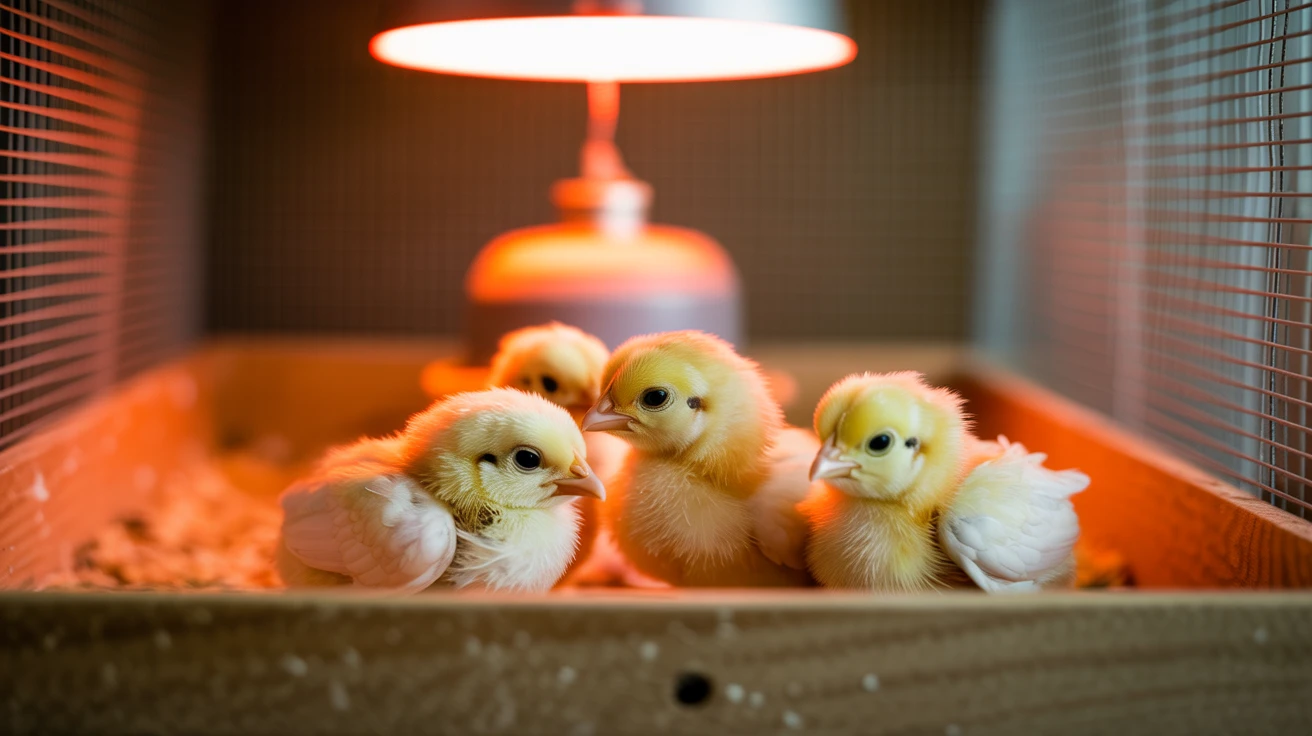
- ✓Brooder box — A large plastic tote or stock tank with a heat lamp (95°F first week, decrease 5°/week) for chicks. Not needed for pullets (16+ weeks).
- ✓Starter feed — Chick starter (18-20% protein) for weeks 1-8, then grower feed (16% protein) until laying age.
- ✓Waterer — 1-gallon chick waterer for starters. Upgrade to a 3-5 gallon waterer for adults. Clean water is the single most important health factor.
- ✓Coop — Minimum 4 sq ft per hen inside, 10 sq ft per hen in the run. Use our Coop Size Calculator for exact dimensions.
- ✓Bedding — Pine shavings (not cedar) for the coop floor and nesting boxes. Budget $15-25/month.
- ✓Calm breeds — Rhode Island Reds, Buff Orpingtons, or Plymouth Rocks. Avoid flighty breeds for your first flock.
Flock Size Recommendations by Goal
Your ideal flock size depends primarily on what you want to accomplish:
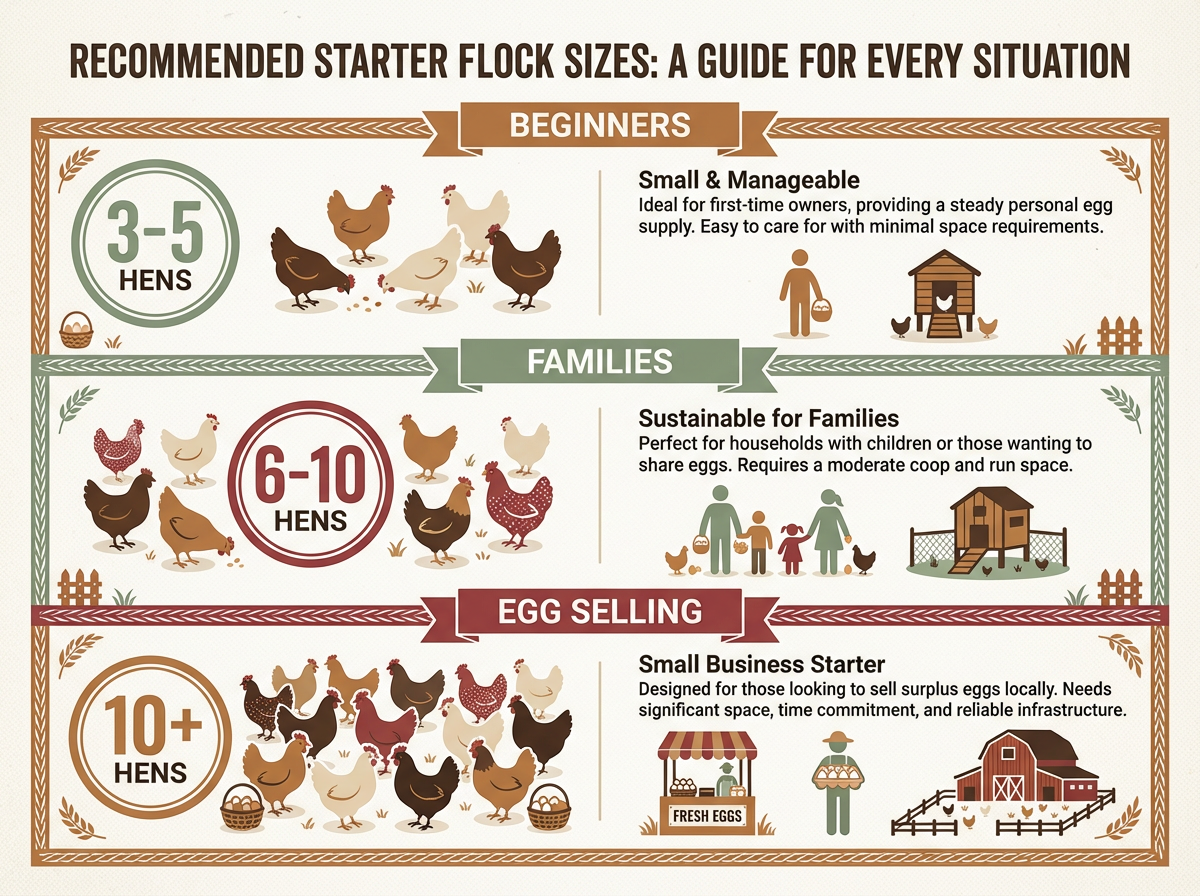
Learning the Basics: 3-5 Hens
This is the sweet spot for first-timers. Three to five hens produce 15-25 eggs per week, keep costs low ($400-600 startup), and require a modest 12-20 sq ft coop. You'll learn the daily rhythms — feeding, egg collecting, coop cleaning — without being overwhelmed.
Family Supply + Sharing: 6-10 Hens
Families of 3-5 who eat eggs regularly should consider 6-10 hens. This provides 30-50 eggs per week with surplus to share. The coop needs 24-40 sq ft, and monthly feed costs run $30-50.
Selling Eggs: 10-20+ Hens
If your goal includes selling eggs at farmers markets, 10-20 hens is the minimum for consistent supply. At $6-8/dozen, 15 hens producing surplus can generate $30-40 weekly revenue.
How Many Chickens for a Family of 4?
This is the most common question we get, and the answer is straightforward: 6 hens. Here's the math:
- 6 hens × 5-6 eggs/week each = 36-40 eggs per week at peak production (spring/summer)
- A family of 4 typically uses 1-2 dozen eggs per week for meals
- That leaves 12-16 surplus eggs weekly to share with neighbors or sell
- During winter molt, production drops 30-50%, but 6 hens still cover a family's needs
The surplus is actually the key. Sharing eggs builds community goodwill, and selling them ($5-8/dozen) helps offset feed costs. Six hens also provide a buffer — if one hen goes broody or stops laying, you still have five producers.
Check Local Regulations Before You Buy
This is the step most beginners skip — and the most important one:
- Bird limits: Many cities cap flocks at 4-8 hens.
- Rooster bans: Most suburban areas prohibit roosters.
- Setback requirements: Coops often must be 10-25 feet from property lines.
- HOA restrictions: Check CC&Rs — many HOAs ban poultry entirely.
- Permits: Some jurisdictions require annual permits ($25-100).
How Your Yard Limits Flock Size
Each standard chicken needs 4 sq ft of coop space and 10 sq ft of run space. A flock of 6 requires at least a 4' × 6' coop and 6' × 10' run. Use our Coop Size Calculator to find exact dimensions for your planned flock.
Best Breeds for Beginners
- Rhode Island Red: Hardy, productive (250-300 eggs/year), friendly temperament.
- Buff Orpington: Extremely docile, great with children (200-280 eggs/year).
- Plymouth Rock: Gentle, cold-hardy, consistent (200-280 eggs/year).
- ISA Brown: Production champion (300+ eggs/year), friendly and easy to handle.
- Australorp: Record-setting production, calm, tolerates heat and cold well.
Practical tip: buy 1-2 more chicks than your target. Chick mortality is about 5-10%, and sexing accuracy means occasional unwanted roosters. Starting with 5-6 chicks to end up with 4-5 hens is standard practice.
Written by the CoopSize Calc Team
Expert ReviewedOur team combines hands-on backyard chicken keeping experience with data-driven research. Every calculator formula and product recommendation is based on USDA poultry guidelines, manufacturer specs, and real-world flock management across varied climates and flock sizes.
Learn more about our methodology →